RENEWABLE ENERGY
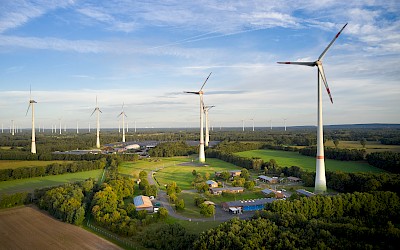
The Münsterland region has significant capacity for generating electricity from renewable energy sources and has developed expertise in wind energy, photovoltaics, and bioenergy. Companies, research institutions, and regional networks are also working on topics such as hydrogen, energy systems, and the circular economy. As a result, the region offers a wide range of opportunities for companies working on new energy and resource systems or utilizing related technologies.
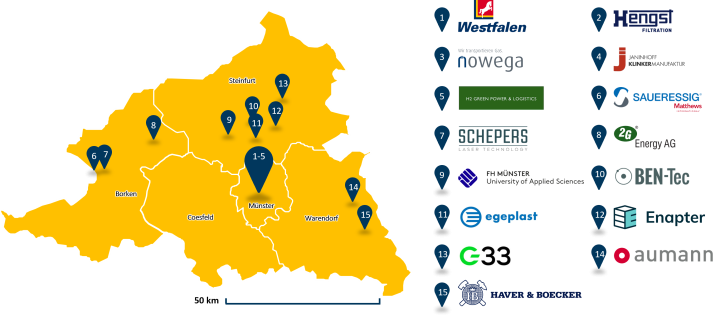
Regional electricity generation from renewable energy sources accounts for approximately 68 percent of electricity consumption in the Münsterland region. In some districts, the share is even higher: In the district of Borken, renewable electricity generation mathematically exceeds regional electricity consumption (106 percent). The districts of Coesfeld (75 percent), Steinfurt (73 percent), and Warendorf (61 percent) also achieve high shares.
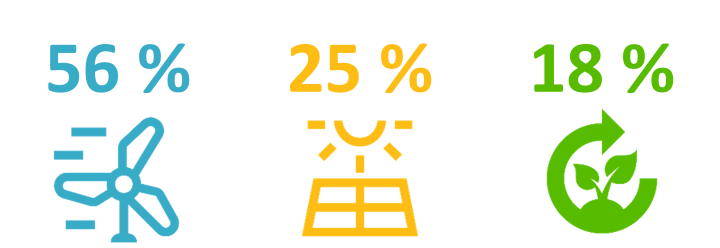
Various technologies contribute to renewable electricity generation. Wind energy accounts for the largest share at 56 percent, followed by photovoltaics at 25 percent and biomass at 18 percent. As a result, the Münsterland region has a diversified generation structure as well as economic and technological expertise in the field of renewable energy.
For companies, it is not only generation capacity that matters. Regional projects, companies, research institutions, and networks offer opportunities for collaboration in the fields of renewable energy, hydrogen, energy systems, and the circular economy.
BatteryCity Münster: Europe's hotspot for battery technology
Münster is emerging as an internationally connected research and production hub for battery technologies. With the Fraunhofer Institute for Battery Cell Research and Production (FFB), the MEET Battery Research Center at the University of Münster, the Helmholtz Institute Münster, and the IWARU Institute at Münster University of Applied Sciences, the region boasts expertise across the entire battery value chain—from materials and cell research to production and scaling processes, all the way to application and recycling. The cluster is supported by Technologieförderung Münster GmbH, which handles coordination and works closely with industry, academia, and policymakers.
The goal is to strategically position the Münsterland region as an international hub for innovation and production in battery technologies—particularly in the areas of electric mobility, stationary storage solutions, and decentralized energy concepts.
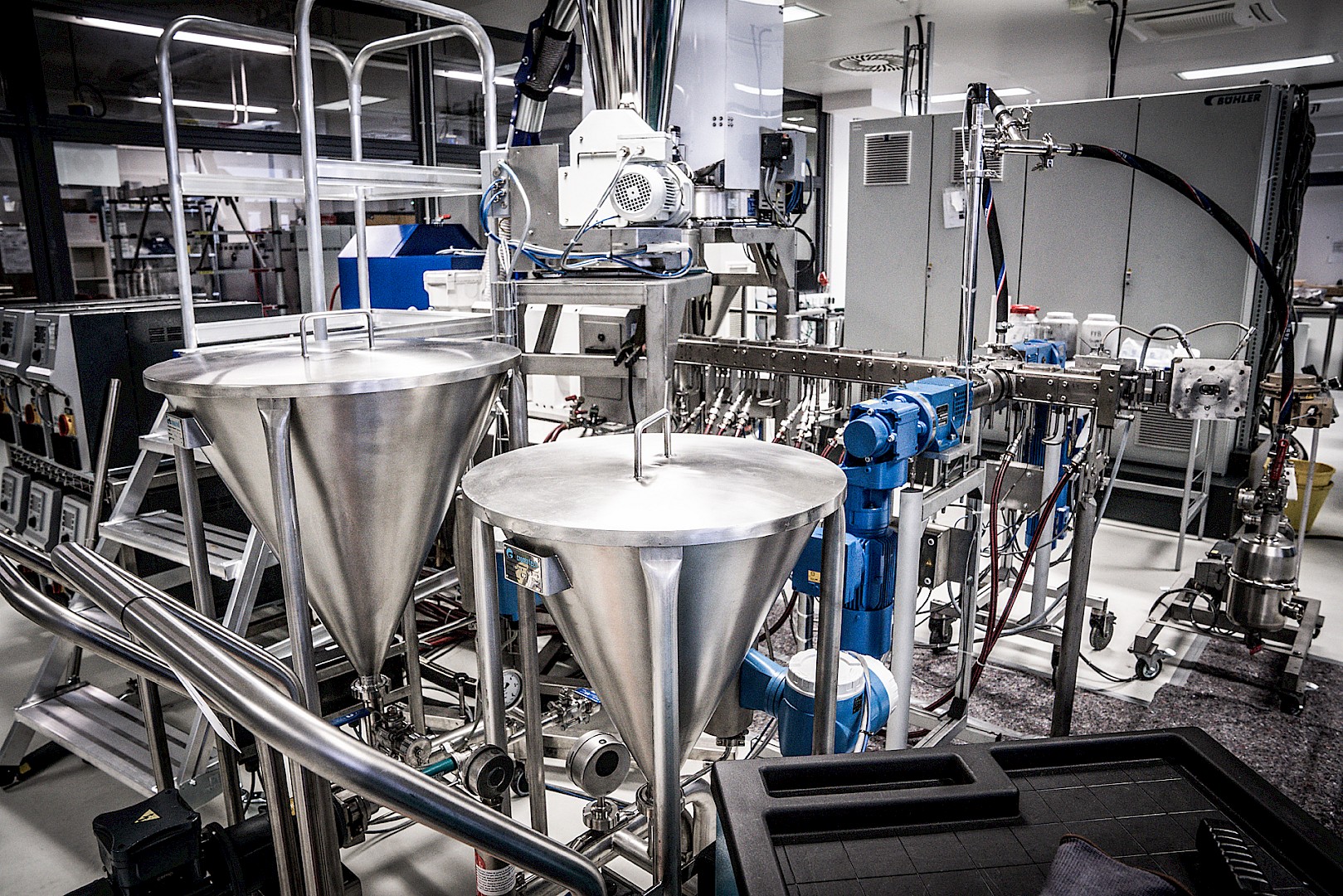
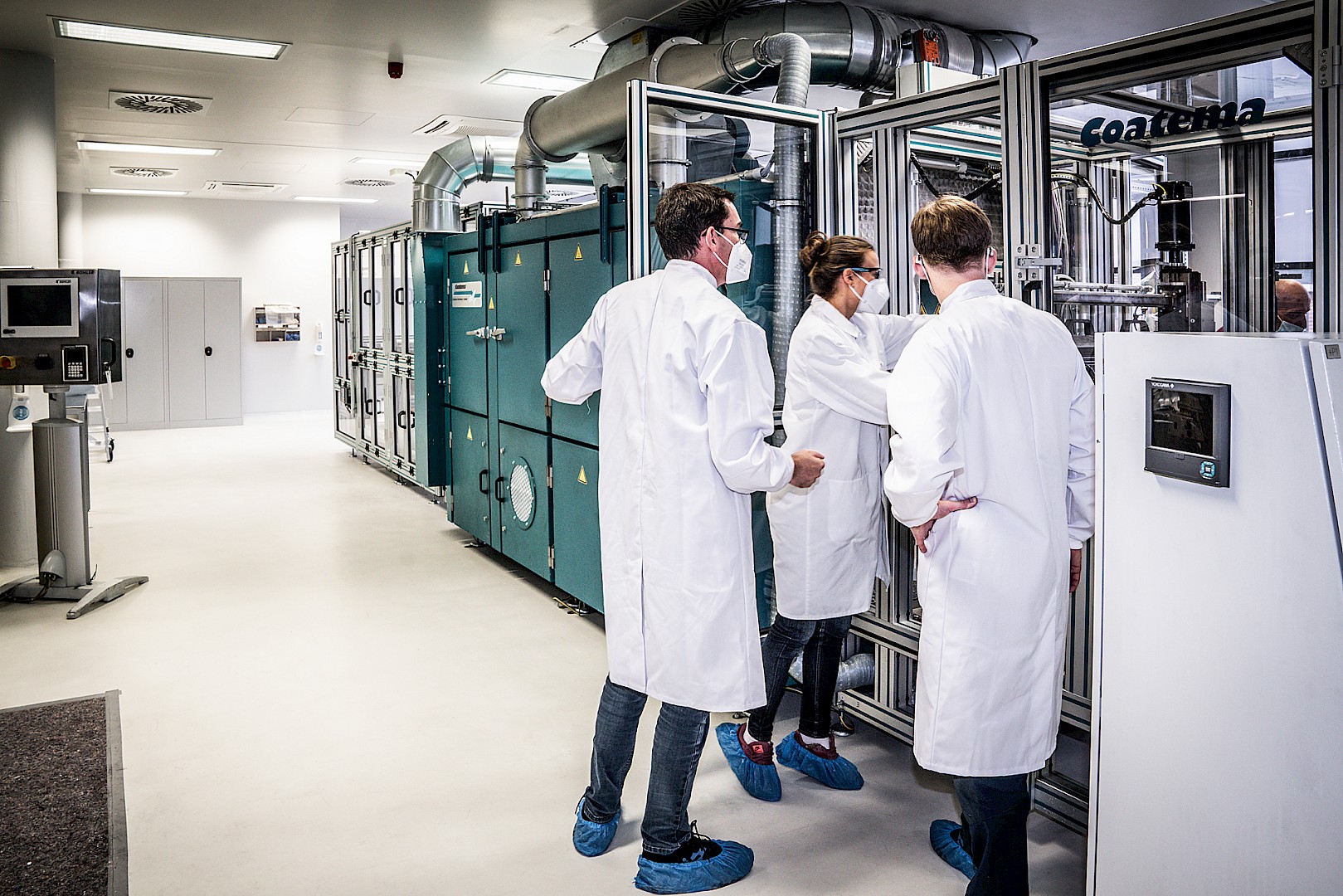
A particular focus is on transferring research into industrial applications. At Fraunhofer FFB, new production processes can be developed, tested, and scaled up to near-industrial levels. This provides companies with concrete opportunities for research, development, pilot projects, and collaborations.
New infrastructure is also being built: BATTL³ will provide additional office, laboratory, and development space for companies in the fields of batteries, energy storage, and related technologies. Completion is scheduled for late 2027.
A concrete example of the integration of energy and battery technology is the power supply for FFB PreFab: Under a power purchase agreement, 6.36 GWh of regionally generated photovoltaic electricity from a nearby agri-PV plant has been supplied annually since November 2025.
BatteryCity Münster brings together these areas of expertise and connects research institutions, companies, and startups. This provides companies with access to research infrastructure, technological expertise, and collaboration partners within the battery ecosystem.
Discover BatterCity Münster

- Opened in 2009, moved to MEET-Arkaden in 2011
- Independent institution of the University of Münster since 2013
- >120 projects
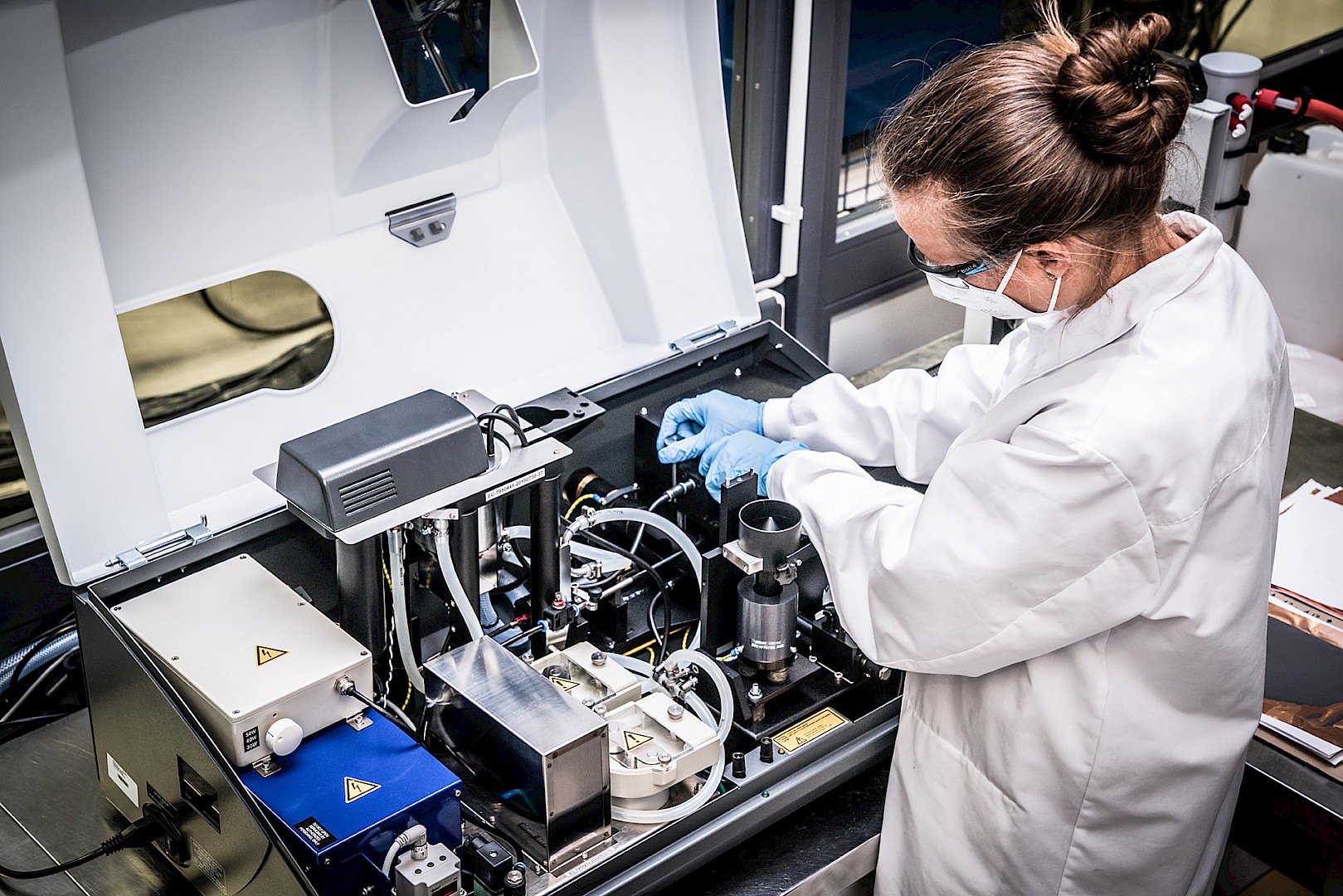
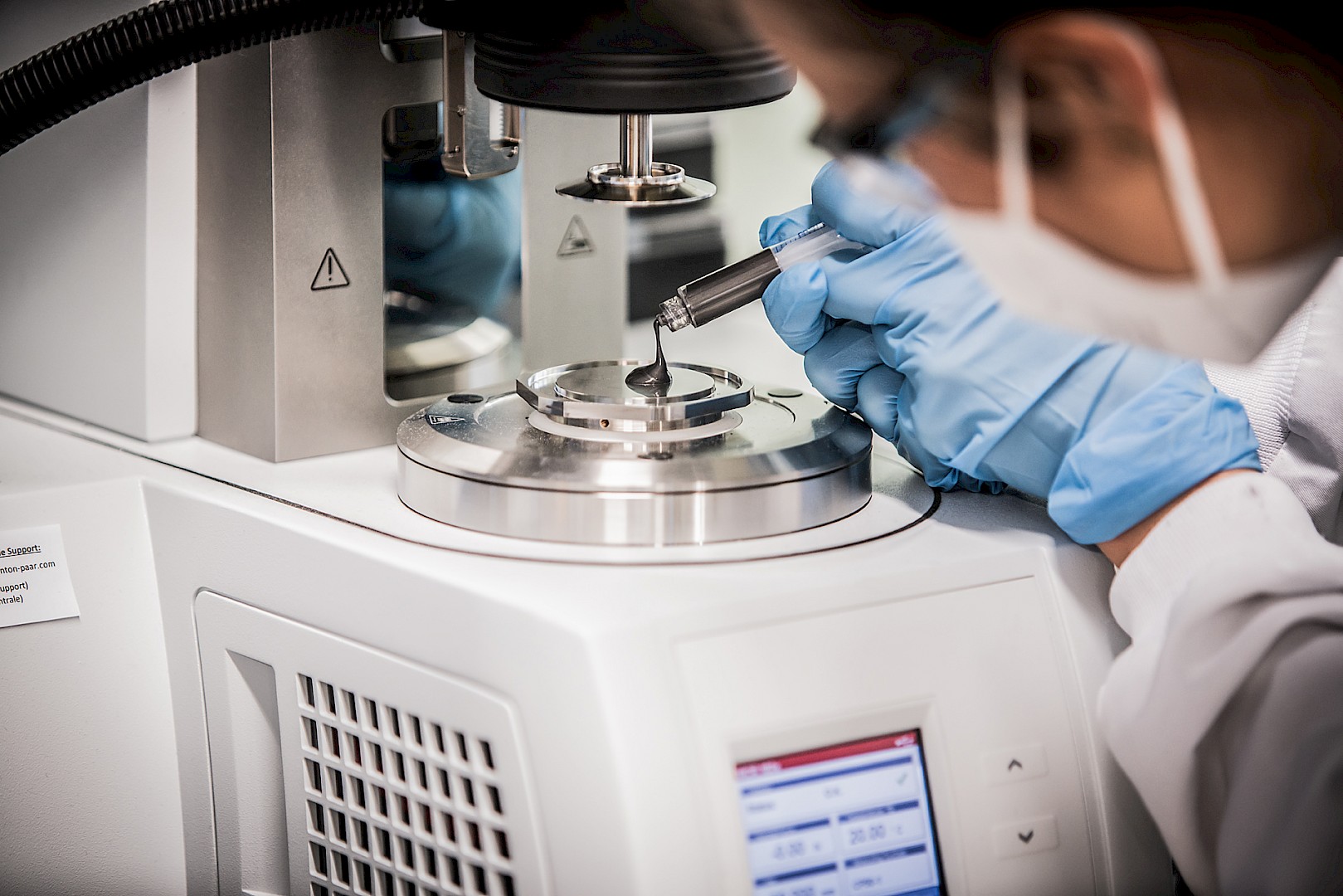
- Research focus:
- Materials (active and inactive materials)
- Cell systems (cell & cell design, ageing, safety)
- Analytics & environment (material characterization, recycling & second life, method development)
- Founded in 2014 by FZ Jülich, the University of Münster and RWTH Aachen University
- Officially launched in 2015 as part of the Institute of Energy and Climate Research (IEK) at FZ Jülich (IEK-12/HI MS)
- New building directly next to MEET (launch in 2022, handover in 2025)
- Research focus:
- Solid-state, liquid, polymer and hybrid electrolytes
- InterfacesTheory & modeling
- Up to €820 million for building construction and equipment
- More than 200 battery experts (including partners)
- Innovation modules for start-ups and technology-oriented companies & projects
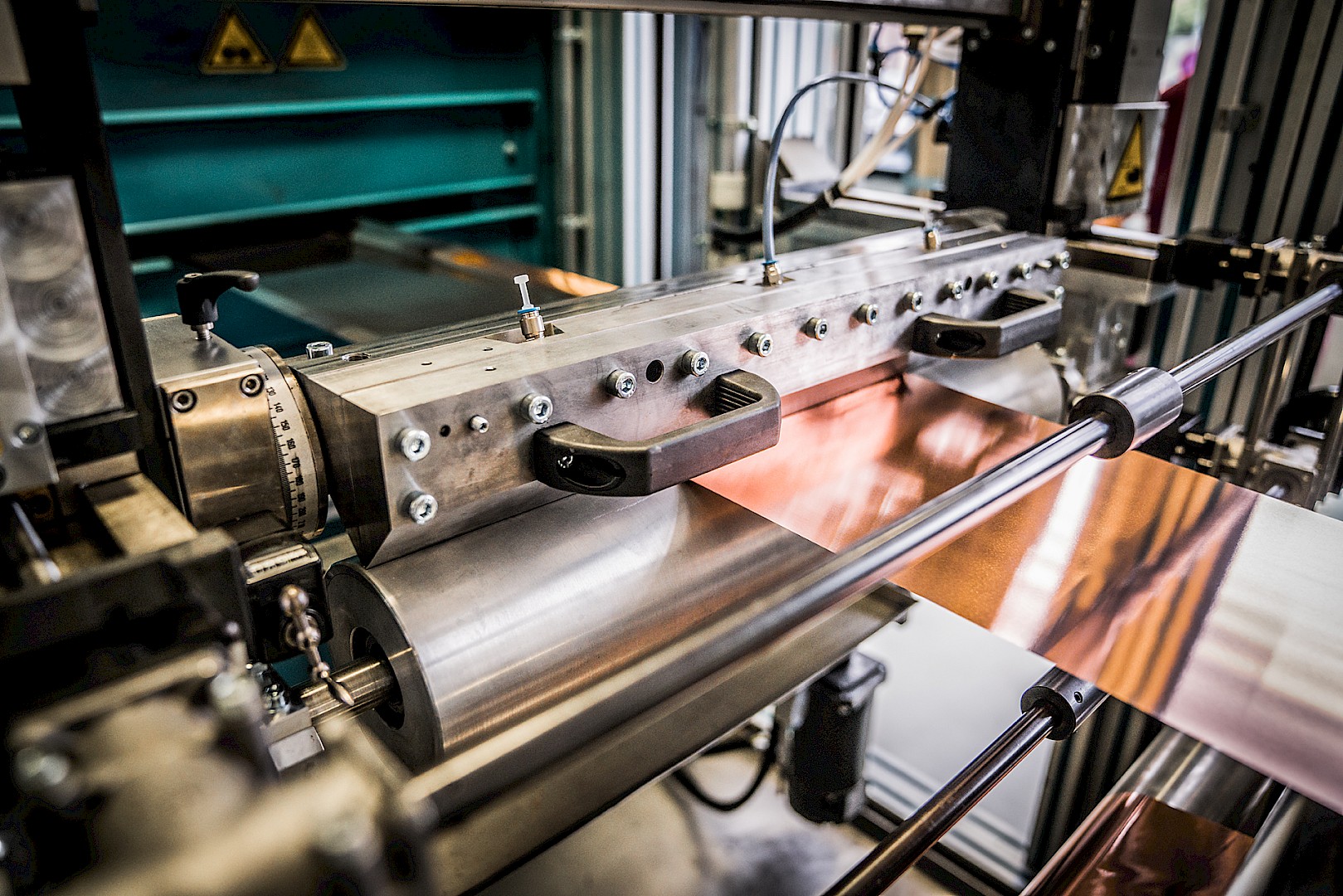
- Open battery factory for research into innovative production processes
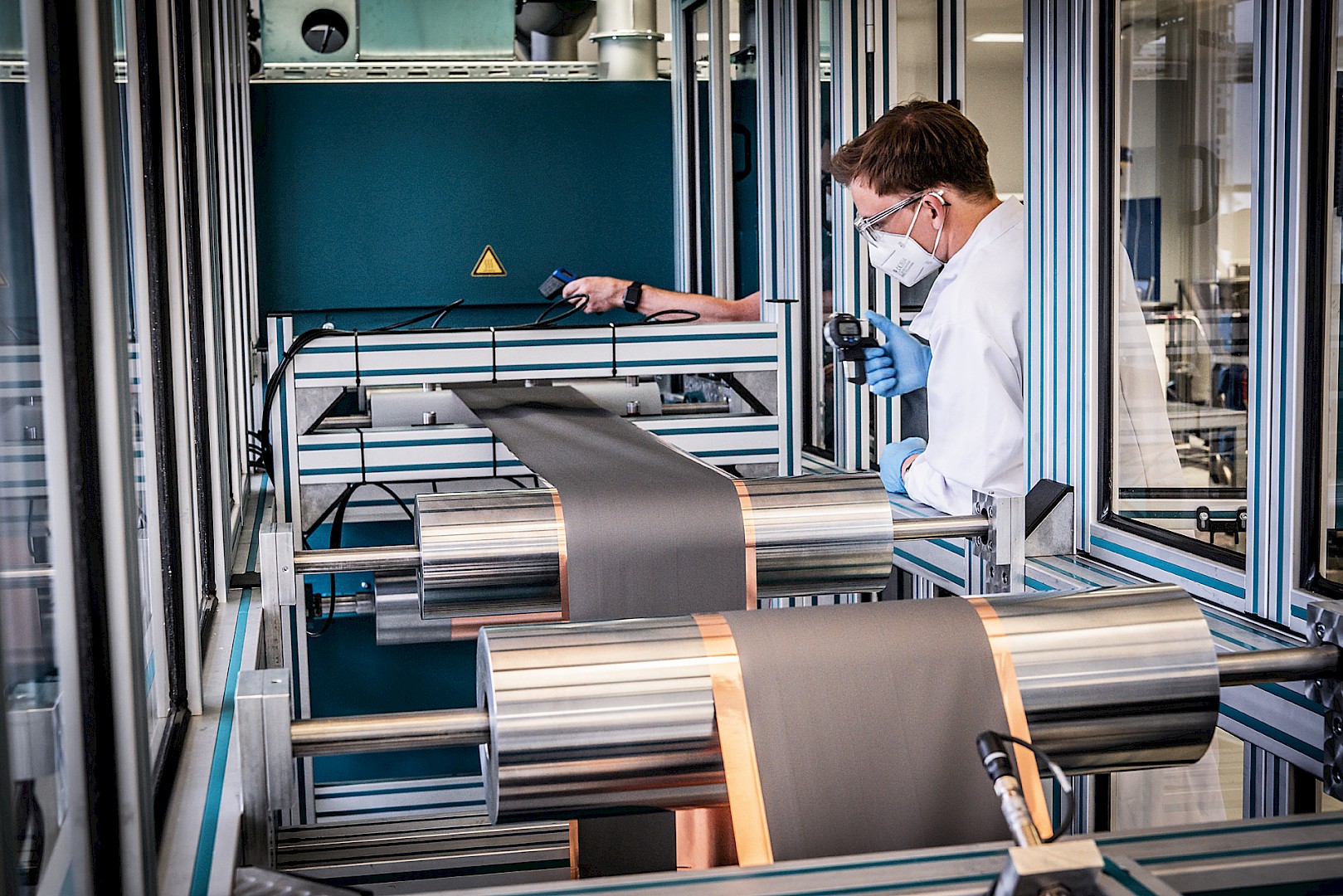
- Electrode production (mixing, coating, drying, calendering, cutting)
- Cell assembly (winding, welding, housing, electrolyte filling)
- Forming (charging-discharging, ageing, degassing)
FFB Workspace - since 2011
- 430 m² incl. clean room
- 50 MWh/a (Electrode)
FFB PreFab - 2024
- 3,000 m²
- 200 MWh/a (Electrode)
FFB Fab - 2027
- 20,000 m²
- 6,8 GWh/a (Electrode)
- 3x200 MWh/a (Cell assembly)
Resources working group
- Circular economy and battery recycling
- Technical center since 2008 with an area of approx. 850 m²Laboratory and semi-industrial-scale trials
- Various shredding units for battery recycling
Research focus in the battery sector: Mechanical processing (shredding)
- Automation of the dismantling of LIBs and packs
- Sensor-supported processing of LIBs
- Wet processing methods
IWARU - Institute for Infrastructure · Water · Resources · Environment - FH Münster
Biomass in the Münsterland Region: Energy from Regional Material Flows
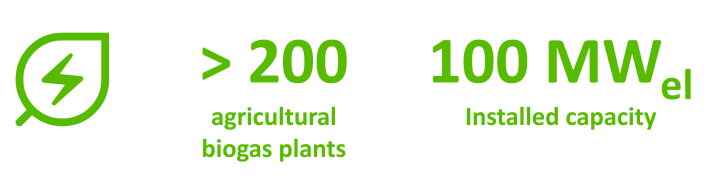
Agriculture and bioenergy are closely intertwined in the Münsterland region. More than 200 agricultural biogas plants with a total electrical output of approximately 100 MW are in operation in the region. As a result, the Münsterland region has a well-established infrastructure and many years of experience in the production and use of biogas.
An important foundation for biogas production is the Münsterland’s distinctive agricultural structure. Various agricultural substrates and residual materials serve as feedstocks. These include, in particular, liquid manure and solid manure from livestock farming, plant-based residues, and renewable raw materials such as corn and grains. The specific substrates used vary depending on the plant and its operational concept.
Looking to the future, the focus is shifting toward both the further development of substrate utilization and new utilization concepts for existing biogas plants. These include, for example, the increased use of residual and by-products, flexible electricity and heat generation, and new business and operational concepts.
This is precisely where the VeBiT MSL project—Networking Biogas Technology in the Münsterland Region—led by Münster University of Applied Sciences in collaboration with regional partners comes in. The project focuses on the further development of existing biogas plants, new business and operational concepts, and the networking of plant operators, technology providers, consultants, and regional partners.
The Saerbeck Bioenergy Park demonstrates how different technologies can be combined at a single site. Wind energy, photovoltaics, and biogas are integrated on the approximately 90-hectare site of a former ammunition depot. Today, the site is home to seven wind turbines, two biogas plants, and a large ground-mounted photovoltaic system.
For companies, the presence of more than 200 biogas plants in particular offers opportunities for plant engineering and optimization, new operational concepts, flexible energy generation, and the further development of regional energy systems.
Hydrogen: Infrastructure, Storage, and Industrial Applications
Key components of a future hydrogen infrastructure are taking shape in the Münsterland region. The first sections of the German core hydrogen network in the Borken district are already hydrogen-ready, and additional connections are in the planning and implementation stages. The goal is to gradually connect the region to supraregional hydrogen transport routes.
Another key component is taking shape in Gronau-Epe: RWE Gas Storage West plans to begin commercial operations of a hydrogen cavern storage facility there on July 1, 2027. The facility is designed to have a working gas volume of approximately 38 million cubic meters, with injection and withdrawal capacities of 50,000 cubic meters per hour each.
At the same time, concrete applications are emerging in companies and projects across the region. The Janinhoff Klinkermanufaktur in Münster, for example, is preparing to gradually convert its energy-intensive firing processes from natural gas to hydrogen. The subsidized transformation project is expected to reduce greenhouse gas emissions by approximately 9,067 metric tons of CO₂ equivalents per year. A pipeline-based hydrogen supply is planned for the intensified test runs starting in 2028.
Companies and institutions are also working on hydrogen production, transportation, industrial applications, and mobility. Regional networks bring together technology providers, infrastructure operators, companies, and researchers for this purpose. In Münster, for example, the Hydrogen Cluster brings together companies across various segments of the hydrogen value chain.
H2EART expands this perspective across national borders. The planned Hydrogen Valley connects partners in Germany and the Netherlands and encompasses hydrogen production, transportation, storage, and applications in industry, energy, and mobility. Current project plans call for approximately 520 million euros in investments and 380 MW of electrolysis capacity.
This creates opportunities for companies across various segments of the hydrogen value chain—from infrastructure and storage to technology development and industrial applications.
Circular Economy: Rethinking Material Flows
The circular economy opens up new opportunities for companies to use materials for longer, reuse residual materials, and develop new value-added and business models. In the Münsterland region, regional material flows, economic expertise, and stakeholders from business, academia, and institutions are being brought together for this purpose.
Through the “Münsterland Circular Economy Region” project, Münsterland e.V., in collaboration with Münster University of Applied Sciences, the North Westphalia Chamber of Commerce and Industry, and the Münster Chamber of Crafts, is establishing a regional network of expertise. An analysis of regional material flows has identified five areas with particular potential for the region: batteries, plastics, mineral building materials, biogenic waste materials, and mechanical engineering.
In focus groups, companies and other stakeholders are working to better understand material flows and recycling potential, identify opportunities for cooperation, and develop approaches for circular business models. This creates concrete points of connection between companies, technology providers, academia, and other regional partners.
For companies, the Münsterland region thus offers access to a growing network centered on circular value creation—from the use of residual materials and secondary materials to the development of new products and business models.
Further information on the initiative: Münsterland Circular Economy Region | Competence Network